Tag Archives: Story Maps

Bridging the Gap Between Scientists and Policy Makers: Whither Geospatial?

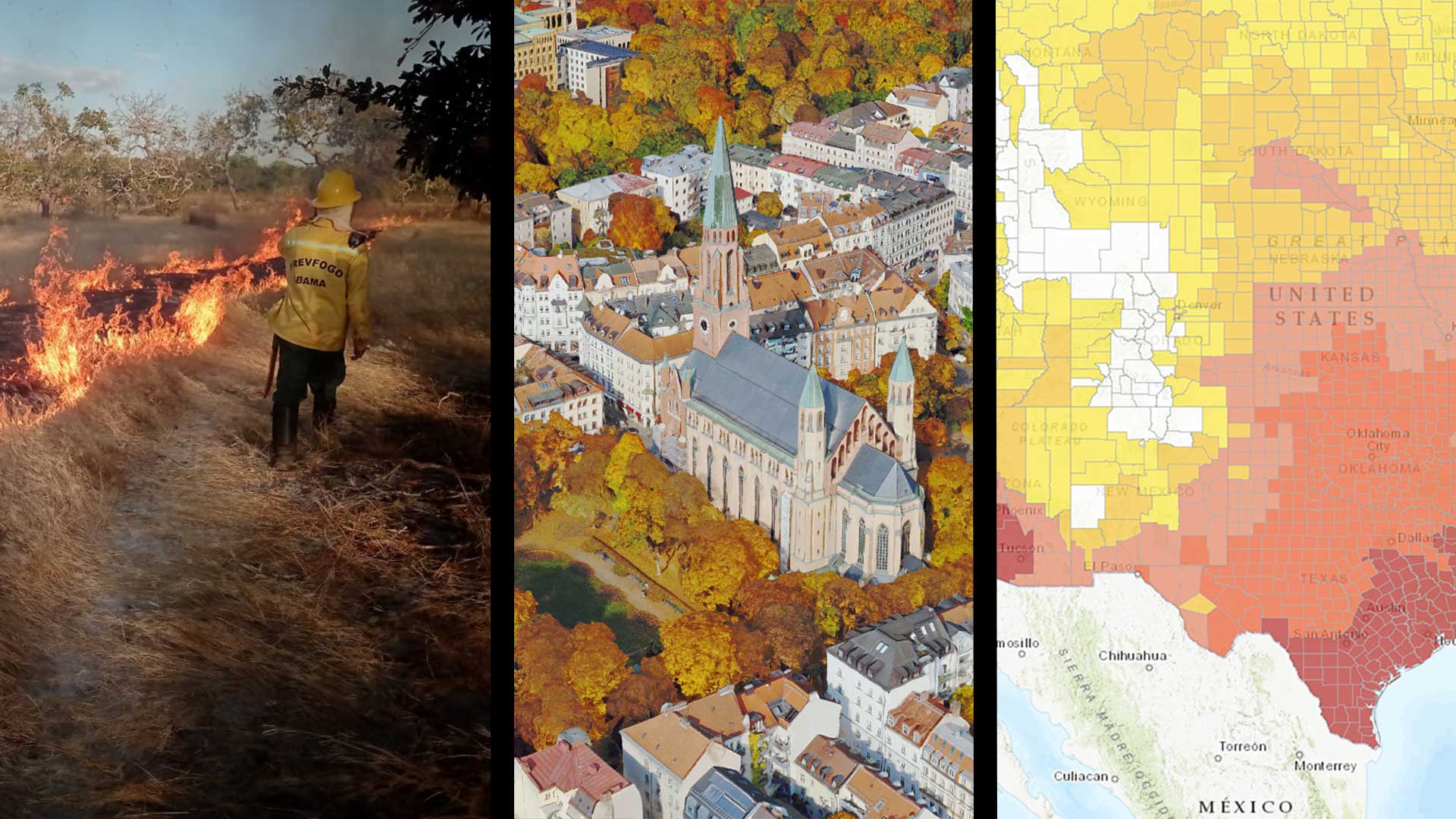
“We, the people, still believe that our obligations as Americans are not just to ourselves, but to all posterity. We will respond to the threat of climate change, knowing that the failure to do so would betray our children and future generations. Some may still deny the overwhelming judgment of science, but none can avoid the devastating impact of raging fires, and crippling drought, and more powerful storms.”

Thus spoke President Barack Obama in his 2nd inaugural address, to the delight of many, if not most in the scientific community. Indeed, there are many societal problems across the world that increasingly revolve around science. These include pollution and waste management, pandemics and biosecurity, access to clean air and clean drinking water, response to and recovery from natural disasters, choices among energy resources (oil and gas versus nuclear versus “alternative”), and the loss of open space in urban areas, as well as biodiversity in rural areas. And yet, there is a tension between the world of science, which is focused on discovery, and the world of policy making, which is focused on decisions.

Continue reading

Posted in Vision | Tagged , , , , , , , | 2 Comments

Multi-dimensional Mapping: The Civil War Story Map

Ongoing sesquicentennial observances have heightened interest in a topic that millions of Americans have always found spellbinding. The saga of the Civil War seemed an ideal opportunity to test some techniques for timelines, animations, and search functions tied to interactive maps.

The “Battlefields of the Civil War” map was the latest in an ongoing effort to show how intelligent maps can help users explore subjects over both space and time. We’re also seeking to give users different options for browsing, navigating, and discovering content—even within a single story map. Continue reading

Posted in Storytelling with Maps | Tagged , , | Leave a comment

Linear vs. Non-Linear Storytelling: The Map Tour Template

We’ve been developing story maps for over a year now, and from the start we’ve defined the term liberally. Many, even most, of our stories are non-linear; that is, they allow the user to browse and wander through the story at will. We’ve organized these stories using elements such as headlines, text blocks, map legends, and user interfaces that help guide the user through the map. But there’s no “correct” sequence by which users are supposed to navigate through these story maps.

Traditionalists might insist that a story is by nature linear. Written or oral stories are in fact linear narratives. Even stories that jump back and forth in time are written and read in a linear fashion. The mediums of text and the spoken word require it: you can’t tell, read, or listen to a story all at once, or back to front, or at random. It’s at least theoretically possible, perhaps, but doing so makes comprehension difficult.

Continue reading

Posted in Storytelling with Maps | Tagged , , , | 2 Comments

Telling Stories with Maps

Stories are a very important aspect of our society, and storytelling is one of the things that make us uniquely human.  Stories convey important knowledge about the world around us, often in a simplified yet dramatic fashion designed for maximum impact.  We have much to learn, remember, and understand in life, but wrap a great story around something and it will make an impression on us that lasts a lifetime.

So where do maps fit in the storytelling realm?  I recently spoke with Allen Carroll, who left National Geographic about a year ago and is now ArcGIS Online Content Program Manager at Esri, about Story Maps—a new initiative he’s working on with David Asbury, Lee Bock, and Stephen Sylvia to integrate storytelling and maps.

Continue reading

Posted in Storytelling with Maps | Tagged , , , , , | 4 Comments