Author Archives: Jack Dangermond

Jack Dangermond
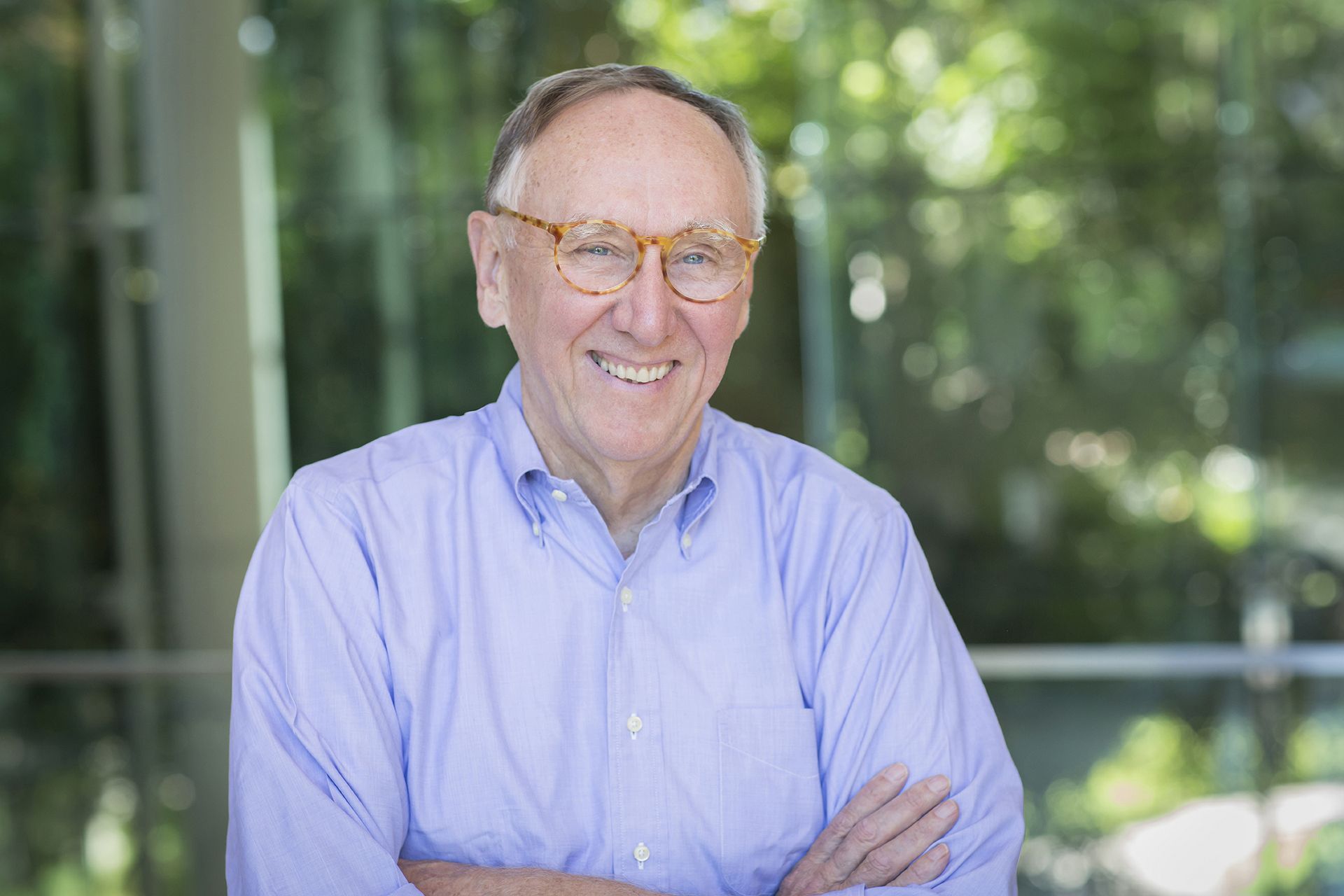
Jack Dangermond founded Esri with a vision that computer-based mapping and analysis could make significant contributions in the areas of geographic planning and environmental science. The recipient of 10 honorary doctorate degrees, he has served on advisory committees for the National Aeronautics and Space Administration, the Environmental Protection Agency, the National Academy of Sciences, and the National Science Foundation.

Recent Posts

Transforming ArcGIS into a Platform

At the foundation of Esri’s work are the belief and vision that geography is a science that creates a better understanding of our world. Using GIS, geography has also become a unifying framework for integrating many forms of digital information. GIS has now become an important technology in almost every field, improving efficiency, communication, and decision making. Our users have made GIS come alive in countless applications across thousands of organizations. I would like to both acknowledge and thank our users and partners for supporting Esri’s mission of evolving our GIS technology.


Historical Context

Over the last four decades, Esri has evolved both its business model and technology offerings through four distinct phases always focused on GIS software services and support.

Continue reading

Posted in Vision | Tagged , , , , , , | 1 Comment

GIS is STEM!

Today’s youth are tomorrow’s decision makers, and an understanding of geography and the use of geospatial technology will be crucial to helping them make good decisions that affect global health and community life. Unfortunately, geography has always been sort of an “underdog” in our educational system; it’s been misunderstood, generalized, and sometimes ignored. Even today, as we see increased focus on STEM in education, we frequently see geography completely disregarded as a component of STEM.

This is very unfortunate. STEM stands for science, technology, engineering, and mathematics. Geography touches heavily on all of these disciplines, and the application of geospatial technology helps us to better understanding cross-disciplinary phenomena and solve important problems. GIS, GPS, and remote sensing can be used to simultaneously engage students in science, technology, engineering, and math.

Continue reading

Posted in Uncategorized | 1 Comment

Geography as a Platform

Following are a few notes from my talk at the 2012 Esri User Conference. You can watch the complete video here.

Geography is our platform for understanding the world.  GIS is making geography come alive. GIS condenses down all of our data, our information, our knowledge, and our science into a kind of language that we can easily understand: maps.

Maps help us integrate and apply our knowledge. Maps also tell stories—stories about almost everything in our world. We need to harness the power of maps to design the future and create better outcomes.

I’m very confident that we can do this. One reason is that GIS itself is advancing; it’s getting more powerful and it’s getting easier to use. It’s evolving with lots of new capabilities. It’s moving to the cloud and becoming more pervasive. GIS has evolved mapping to a new level, creating geography as a platform.

Continue reading

Posted in Vision | Tagged , , , , | Leave a comment

Can Geodesign Help Us Adapt to Climate Change?

The earth’s climate is changing, leading to serious problems for humanity in areas such as food security, health, and public safety. We need to adapt swiftly. But where do we start? Should we reinforce or rebuild existing structures? Or should we abandon existing settlements and relocate the population in some cases? And how can mass rebuilding/relocation efforts be best accomplished from human, environmental, and economic perspectives?

Geodesign is a framework for understanding the complex relationships between human-designed settlements and the changing environment, for quickly planning ways to adapt existing communities and build new ones in a more sustainable manner. This methodology helps us assess risk, identify change, create synergies, develop strategies, adapt to change, and monitor the results. Geodesign takes an interdisciplinary, synergistic approach to solving the critical problems of future design—to optimize location, orientation, and the features of projects at local and global scales.

Continue reading

Posted in Vision | Tagged , , | 2 Comments

GIS and The City 2.0

More than 50% of the 7 billion people inhabiting our planet now live in cities, a number projected to grow to more than 75% during this century. The growth of cities as the center of the human world was highlighted when “The City 2.0” was awarded the 2012 TED Prize.  “For the first time in the history of the prize, it is being awarded not to an individual, but to an idea,” the TED committee stated. “It is an idea upon which our planet’s future depends.”

Clearly cities will play an increasingly important role in our future survival. Cities offer easier access to services, and urban dwellers are more efficient consumers of limited resources. Cities are human destiny. But as our cities become more populated and more numerous, how do we best manage this complexity?

We need to start thinking about cities in a different way.

Continue reading

Posted in Vision | Tagged , , , , | 2 Comments

GeoDesign for Climate Change Adaptation

Designing a more sustainable future

The earth’s climate is changing, leading to serious problems for humanity in areas such as food security, health, and public safety.

As our environment changes around us, we need to adapt swiftly. But where do we start? Should we reinforce or rebuild existing structures? Or should we abandon existing settlements and relocate the population in some cases? And how can mass rebuilding/relocation efforts be best accomplished from human, environmental, and economic perspectives? Continue reading

Posted in Industry Focus | Tagged , , | 19 Comments

Managing Our Man-Made Ecosystems

In modern society, buildings are where we spend the vast majority of our waking and sleeping hours.  Our facilities are man-made ecosystems—vast assemblages of interdependent living and non-living components.  Facilities have become the primary habitat for the human species.

As technology advances at a record pace, our man-made ecosystems are becoming ever more complex and sophisticated.  These intricate collections of materials, infrastructure, machinery, and people, with countless spatial and temporal relationships and dependencies, require progressively more sophisticated tools to help us design and manage them.

The recognition of facilities as habitat for modern man is leading to a revolution in facilities management.  GIS technology is designed specifically for the management and analysis of spatial relationships, and offers many benefits to the facilities management community.  It only seems logical to manage, model, and design our new man-made ecosystem with the same tried and true tools used to manage, model, and design traditional ecosystems.  And this is already happening.

Continue reading

Posted in Vision | Tagged , , , | Leave a comment

Improving Government Transparency and Accountability

Born out of the Gov 2.0 movement, the terms transparency and accountability have become part of the daily vernacular of governments and the citizens they serve. One might even suggest these words have become a new expectation of governing. Transparency and accountability began with a simple concept of openly communicating public policy to the taxpayer. Today, these concepts are thriving within a growing emphasis on developing an interactive dialog between governments and the people.

Continue reading

Posted in Uncategorized | Tagged , , , , | Leave a comment

The Future Looks Bright for Spatial Thinkers

Many industries have suffered during the current economic downturn.  So why is it that during this same period, demand for geospatial technology professionals has grown significantly?

I think that this trend is due to the growing understanding of the value of spatial information and analysis.  There are many reasons to implement GIS, but the benefits that we see driving organizations in lean times are cost savings resulting from greater efficiency.  And as we come out of this economic downturn, the efficiencies realized from GIS will become a standard way of doing business, so the need for geospatial professionals will increase even more.

Continue reading

Posted in Vision | Tagged , , | 6 Comments

Jane Goodall’s TACARE: GeoDesign in Action

It’s a rare person who can make important scientific discoveries, drive significant social change, and break down gender barriers—all while becoming a household name.

Jane Goodall is such a person. As a young child, she dreamed of experiencing the geography of Africa.  And she’s a woman who has lived her dream. She set off to Gombe, Tanzania, and studied chimpanzees there for more than 50 years. What she found not only defined the first half of her career but also redefined humankind.

Continue reading

Posted in Vision | Tagged , , | Leave a comment