Tag Archives: petroleum

High Accuracy GPS now available with ArcGIS for Windows Mobile!

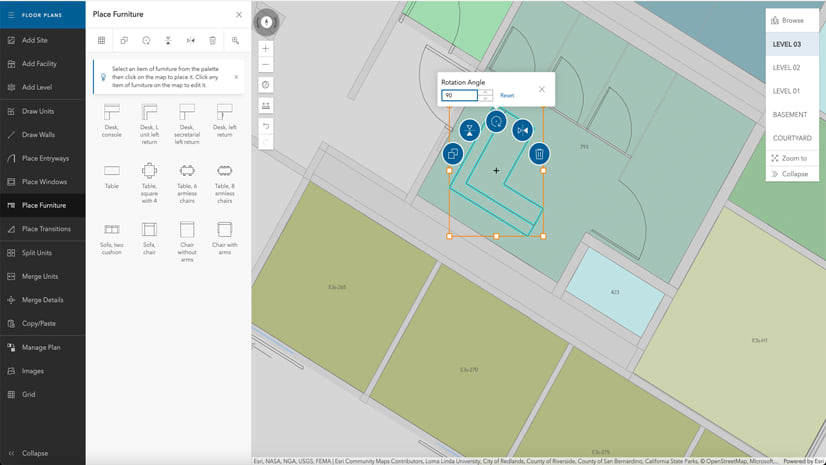
Esri is proud to announce that we now have a GeoCollector solution for high accuracy GPS data collection with ArcGIS for Windows Mobile!

GeoCollector for ArcGIS for Windows Mobile
GeoCollector for ArcGIS for Windows Mobile is an end-to-end field data collection solution that bundles together Esri ArcGIS for Windows Mobile 3.1 software, Trimble® PositionsTM Software Suite by Trimble®, and Trimble® GeoExplorer® 6000 series GNSS hardware. Continue reading

Posted in Mobile | Tagged , , , , , , | Leave a comment

Well Count map template for ArcGIS 10.1 available for download

WellCountAggMXD_shadow

The Well Count Aggregation map template for ArcGIS 10.1 is available for download. This template was designed to allow you to create your own version of the Well Count web map using the provided sample data as well as your own data. The ZIP file contains map documents, sample data, an ArcGIS style file, and documentation. The Well Count map shows how a complex data source, such as gas wells in a producing field, can be aggregated and portrayed in an easy-to-understand manner. Continue reading

Posted in Mapping | Tagged , , , , , , , , , | Leave a comment

Well count aggregation web map

By Mark Smithgall, Esri Cartographer

Well Map Aggregetation Web Count - Thumbnail

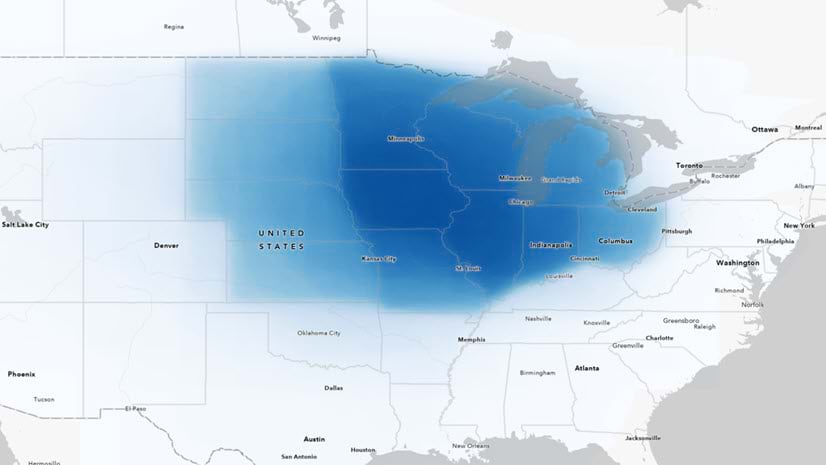
This well count aggregation web map shows how a complex data source, such as gas wells in a producing field, can be aggregated and portrayed in an easy-to-understand manner.  This was designed as an ArcGIS Online web map to show the aggregation number as a proportional symbol of wells per administrative area.  In this case, three levels of aggregation were used based on the most logical administrative areas:  parishes, Public Land Survey System (PLSS) townships, and PLSS sections. Continue reading

Posted in ArcGIS Online, Mapping | Tagged , , , , , , , | Leave a comment

Building an Enterprise GIS – Best Practices, Design Strategies and Performance Benchmarks

Oil and gas organizations are increasingly recognizing the value of implementing GIS across the enterprise. GIS data is rapidly increasing in its relevance to a wide range of departments, including exploration and production, land management, health and safety, and business operations. No longer are GIS datasets limited to shapefiles on a single user’s desktop.

IT departments may not always be familiar with GIS data and the workflows used to create, manage and distribute this information. Esri provides several online resources to assist you in building a secure, stable, scalable and high-performance enterprise GIS system. Here are some key resources:

  • An Enterprise GIS Resource Center designed to help IT professionals implement a sustainable enterprise GIS by presenting best practices, patterns, and guidance in the areas of security, performance, and application architecture.
  • A comprehensive System Design Strategies Wiki that describes in detail the Esri system architecture design methodology and the fundamental principles that contribute to system performance and scalability.

  • A System Architecture Design Strategies instructor-led course that covers GIS infrastructure architecture alternatives and system architecture design strategies that support successful enterprise operations.

If you would like additional information or assistance in planning your enterprise GIS needs, please contact us.

Posted in Uncategorized | Tagged , , , | Leave a comment

Create and Share Your Feature Templates

You are more than likely familiar with the ArcGIS Map Template Gallery. From this site you can download a collection of maps that work great for web, print and many other GIS applications.  In this post I am going to show you how to create and share your own feature collection template similar to the template we have created for capturing Digital Oilfield assets.

Your work starts with a well designed Geodatabase.  Represent the features and assets you are managing in the geodatabase.  Consider adding domain values to describe the appropriate values for your features. This is a great way to enforce data integrity across your organization.

Once you have established a thoughtfully designed geodatabase it is time to symbolize your features, you will do this in ArcMap. Keep in mind anything you can do to help simplify and best represent your assets will help others in your organization tremendously.  The image below shows the Table of Contents with the features separated by group.


It is also very helpful to fully document not only the map but each of your features.  Anyone using this map will be able to understand what each feature is and how it is to be used. If this map is used to create a map service, the feature and map descriptions will provide useful information to those consuming the service in ArcGIS Online web maps and applications.

Your last step is to package the map schema.  To do this you need to use the Shift Key to select all layers in your TOC.  Once they are selected right-click and choose “Create Layer Package”.  You should see something that looks similar to the image below.

You have several options in this dialog.  You can share this package directly to your ArcGIS Online account or save the layer package locally.  You will also want to make sure and check the dialog that says, “Package schema only”.  This will ensure that no data is riding along with the package. Once you validate the contents you can share it.

Anyone opening the template you just created will be taken directly to an ArcMap edit session to see a consistent and properly symbolized map ready to manage new features for your organization. We have a video you can watch to learn more about how common map templates can be used by many different groups within your organization. Click HERE to watch it.


Posted in Uncategorized | Tagged , , , | Leave a comment

ArcGIS Online at the 2011 PUG – Part 2

(continued from our earlier Part 1 post)

The same map authored using the ArcGIS.com map viewer can be opened in other applications like ArcGIS for iOS for use on an iPhone or iPad, or in ArcGIS Explorer Online.

Shown below is a map opened in Explorer Online. We’ve used map notes to add a proposed road and well location in the Teapot Dome area.

The well location is shown with a pushpin, which includes a link to a photo of the proposed pumpjack-type well, along with a link to a video.

The proposed well location was then added to a presentation that can be easily shared with anyone.

The same ArcGIS Online maps and services can be used in Explorer Desktop, which offers additional capabilities such as adding local content and direct connect to enterprise geodatabases. Shown below is the RMOTC seismic data and geology from ArcGIS Online on top of the World Imagery basemap.

3D layer packages with seismic and geologic profiles and well traces and formation tops were added to display subsurface features. Another 3D layer package showing extruded oil fields based on their value is shown above the surface. The 3D layer packages were authored using ArcGlobe.

Additional resources and information:

Posted in ArcGIS Online, Services | Tagged , | 1 Comment

ArcGIS Online at the 2011 PUG – Part 1

At this morning’s Petroleum User Group (PUG) conference in Houston, we highlighted some capabilities of ArcGIS Online focused towards the oil and gas community. Here’s an overview of the key points of the demonstration.

Maps are important, and what we fundamentally work with as GIS users. We use maps to capture, communicate, and share our geographic knowledge and tradecraft. Maps are also becoming easier to create, to use in a variety of ways, and are becoming more capable and intelligent. One of the ways to leverage ArcGIS Online is to use the ArcGIS Online basemap (free for any use) to begin making your own maps. Shown below is the World Imagery basemap with highly detailed imagery for Qatar:

Next is the World Streets basemap in the Barnett Shale area near Dallas, showing leases, wells, and pipelines obtained from ArcGIS Online content:

After touring ArcGIS.com, we authored a map using published ArcGIS Online content, such as shale gas plays and weather, and ended up in the Teapot Dome area, where we added a time-aware service, shown below. Note the time slider which appears when we connect to a time-enabled service, and allows us to view and interact with the temporal data. The map below (note the slider) shows one-year well production in monthly increments.

After adding seismic data and geology we saved our map, sharing it publicly and in our PUG group to include it with other petroleum content.

Once shared, we can generate the HTML to embed the above map in a website. Shown below is the “borrowed” RMOTC website, now with our live ArcGIS Online map:


And here is the same map in our sample and test blog:

And we can leverage the ArcGIS.com map viewer’s built-in template gallery to quickly create a custom app using our map. Shown below is the popular comparison template showing three different ArcGIS Online maps that can be synchronized together by scale and location. The template source can be downloaded directly from the gallery.

More of the overview in our Part 2 wrap-up

Posted in ArcGIS Online, Services | Tagged , | Leave a comment

ArcGIS Online Time-Aware Maps at PUG

During this morning’s plenary demonstration, we saw some interesting examples of how webmaps are becoming easier to author (using available ArcGIS Online basemaps), easier to deploy, and “smarter.” ArcGIS webmaps now support temporal services – time aware layers that add additional capabilities to the webmap, like the availability of a time slider. Shown below is an example from the demo this morning which shows production wells in the Teapot Dome Oil Field. Note the time slider below the map, which allows the user to play back the well production over time.

Posted in Uncategorized | Tagged , , , , | Leave a comment

ArcGIS Explorer Desktop at PUG Plenary


During this morning’s Petroleum User Group (PUG) opening plenary Bern Szukalski showed an example using ArcGIS Explorer Desktop to consume ArcGIS Online maps that he had authored, and also added seismic and geologic profiles, and well traces. ArcGIS Explorer Desktop allows you to integrate both Web and local content, and view in 2D or 3D mode.


Bern will cover how this was accomplished in his Tuesday ArcGIS Online, Explorer Online, and Explorer Desktop workshop.


Posted in Uncategorized | Tagged , , | Leave a comment

Welcome to the Petroleum Blog!


We are very excited to host a site dedicated entirely to enhancing the implementation and use of GIS for the petroleum industry.

This blog is a feature of the all new Petroleum Resource Center which will make its debut during the 2011 Petroleum User Group (PUG) Plenary session in Houston, Texas on April 18th.  During the plenary session we will demonstrate how you can leverage two new templates for mapping your oilfield infrastructure.  These templates are available for you to download and use now directly from the Resource Center.


Subscribe to the Petroleum Blog and you will receive regular updates regarding new technology, current events and best practice articles directly from the Esri Energy Team. 


Posted in Uncategorized | Tagged , | Leave a comment