Geocoding Tag
The ArcGIS Online team recently updated the subscription task services system (premiumtasks.arcgisonline.com). Geocoding and routing services now use NAVTEQ reference data. With the change to the reference data, you may notice that there might be a slight change in the coordinates of the geocoding candidates returned compared to the previously released version. Highlights include:
Continue reading »
The Data Appliance 5.0 for ArcGIS began shipping last
week.

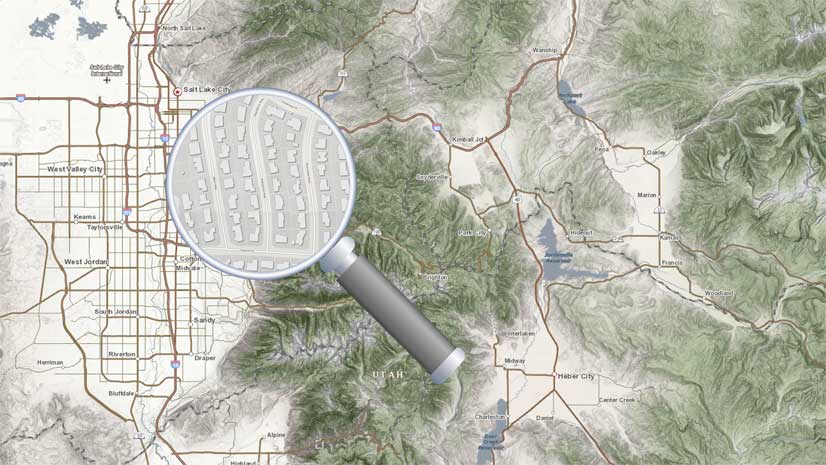
This version of the Data Appliance includes a lot of new data, similar to what was launched online last week. New levels of detail were added at 1:1,000 and 1:2,000 scales in many metropolitan areas around the world for World Street Map, World Topogaphic Map, World Transportation, and World Boundaries and Places. We also added nationwide coverage at 1:5,000 in the same countries outside of the metropolitan areas.
For imagery, the update also includes the latest Aerials Express and NAIP imagery for the United States.
For more details on what’s new in the Data Appliance 5.0 for ArcGIS, visit the ArcGIS Content Resource Center.
The ArcGIS Online team recently updated the task services. Geocoding and routing services now use NAVTEQ reference data. With the change to the reference data, you may notice that there might be a slight change in the coordinates of the geocoding candidates returned compared to the previously released version. Highlights include:
Continue reading »
Creating locators with ArcGIS 10 out of the box address locator styles requires the specific address attributes in one feature class. As the TIGER 2010 dataset consists of multiple feature classes and tables, creating locators with ArcGIS 10 out of the box locator styles requires the tables to be joined properly in advance and are exported to one feature class.
Alternatively, a custom locator style, TIGER – Edges-Dual Ranges, allows you to create locators with the feature classes/tables from the TIGER 2010 data without preprocessing the tables. The locator style requires the following feature classes and tables in the TIGER 2010 dataset:
- tl_2010_xx_edges
- tl_2010_xx_faces
- tl_2010_xx_features
- tl_2010_xx_place10
- tl_2010_xx_state10
You can download the locator style and sample data/tool from the Geocoding resource center:
Due to multiple table joins and selection queries, creating a locator using this locator style may take some time especially if the feature classes contain many features. Preprocessing the tables and exporting the address attributes to one feature class is an option as creating locators with one feature class using the out of the box locator style is generally faster.
UC 2011 was another great conference as we (the geocoding
team) could meet many of you there in San Diego.
I have posted the presentations of the two geocoding
technical workshops on the Gallery of the Geocoding Resource Center. The
Geocoding – Advanced Techniques workshop also includes the demo GP models and
sample workspaces.
Here is the link to the download:
Agatha
Esri
Hello,
Esri UC 2011 is around the corner. If you have made plans to come next week, we (the geocoding development team) would love to meet you. We are excited to be there to learn from you and show you our work on geocoding development.
Please come to visit us in the Spatial Analysis Island in Exhibit Hall C or attend some of our presentations.
Technical workshops
Geocoding – An Introduction
Tuesday 8:30 AM, (Room 14B) – Offering I
Wednesday 1:30 PM, (Room 14B) – Offering II
Geocoding – Advanced Techniques
Tuesday 10:15 AM, (Room 14B) – Offering I
Wednesday 3:15 PM, (Room 14B) – Offering II
ESRI Showcase Software Island Demo Theater
Road Ahead – Geocoding (Tuesday 5:00 PM)
From a table of addresses to locations on the map (Thursday 11:30 AM)
If you have a minute, add a comment to this blog post and let us know what you would like to know more about geocoding.
Looking forward to seeing you in San Diego next week.
Agatha
Esri
The primary theme for ArcGIS 10.1, which is expected to be released in early 2012, is sharing and collaboration. Users will find that this release makes it simpler to put mapping and geospatial analytics into the hands of more people without requiring that they be GIS experts. ArcGIS users will be able to deliver any GIS resource, such as maps, imagery, geodatabases, and tools, as a web service. The ability to access these services will be built into ArcGIS, as well as any application built with one of the ArcGIS APIs.
With this release, cloud computing—both public and private clouds—will play an increasingly critical role in how users get their work accomplished. ArcGIS software will take advantage of the powerful, scalable, and ubiquitous nature of cloud infrastructures to store and distribute geospatial content. Users will be able to easily package their maps and layers and make that content available to staff, stakeholders, partners, or the public via online groups while maintaining complete control and ownership of their content. Additionally, users will be able to quickly deploy GIS servers in the cloud when they need them as fully functional production systems for publishing services and supporting desktop, mobile, and web applications.
At 10.1, ArcGIS for Server will run natively on 64-bit operating systems. Users will notice significant performance improvements for activities such as web editing, map caching, spatial analysis, finding addresses, and using imagery.
Imagery will also be better integrated into the core of ArcGIS. ArcGIS will not only make it simpler to use imagery but also support more imagery sources, as well as lidar and radar.
An exciting addition to ArcGIS at 10.1 will be ArcGIS Runtime, which lets developers create and deploy focused, stand-alone GIS applications for desktop users, who have been asking for a small, lightweight deployment that, in terms of capabilities, fits between ArcGIS Engine and the ArcGIS Web Mapping APIs. The new runtime is designed for both desktop and cloud development. It has a fast display and does not require installation; it can be run directly from a CD. The learning curve for the new runtime is expected to be very gentle for developers familiar with the web APIs.
In addition to these enhancements to ArcGIS, Esri has also concentrated on providing core GIS tools to help users create better maps. These tools range from dynamic legends to contextual generalization, the ability to track edits, parcel editing tools, analysis tools, and a whole lot more.
Finally, as Esri moves toward ArcGIS 10.1, Python is becoming foundational to ArcGIS. It essentially bridges the gap between GIS analysts and programmers.
We will be sharing more and more about what’s coming in ArcGIS 10.1 over the next few months so check back often.
The ArcGIS Online premium task server (premiumtasks.arcgisonline.com) was recently upgraded
to ArcGIS Server 10 SP1. Existing services were updated with the latest
available reference data. In addition, geocoding services are published that
are built using the latest geocoding engine in ArcGIS 10. See Migrating address locators created with ArcGIS prior to version
10 in ArcGIS Desktop 10 Help for details on what’s different in locators
created in ArcGIS 10.
Geocoding service changes include the following:
- The North American Address Locator (TA_Address_NA), North American Batch Address Locator (TA_BatchAddress_NA) and United States Street Locator (TA_Streets_US) were updated with Tele Atlas Q2 2010 reference data:
- A new “SIDE” field is an additional output field that was added to
Address_Points locator in order to return the correct side value. All additional
output fields are appended after the actual output fields. - Output location can be requested in a different Coordinate
System.
- A new “SIDE” field is an additional output field that was added to
- New North American Address Locator (TA_Address_NA_10), North American Batch Address Locator (TA_BatchAddress_NA_10), and United States Street Locator (TA_Streets_US_10) ArcGIS 10
style geocoding services based on TomTom Q2 2010 reference data are now
available for use:- These new locators support a new single line address field.
- Match score (Score) is now a percentage instead of an absolute number;
hence, the type has changed from SHORT to DOUBLE. - Find Address Candidates supports a new outSR parameter that enables clients
to specify an output spatial reference. Single line geocoding is now
supported. - The End offset distance can now be set in other Esri Units such as feet,
meters, and so on. In the ArcGIS 9.3 style locators it was only percentage. - Spelling sensitivity is improved. A character transition table is used for
certain character matching instead of the sound like method in the ArcGIS 9.3
style locators. - Reverse Geocode supports a new outSR parameter that enables clients to
specify an output spatial reference.
- The European Address Locator (TA_Address_EU) and European Batch Address Locator (TA_BatchAddress_EU) were updated with Tele
Atlas Q1 2010 reference data:- There is a modification as to how the locator name (Loc_name) is returned in
the response. The new locator names are now prefixed with EU_Street_Addr or
EU_Street_Name or EU_City or EU_PostCity or EU_Postcode followed by the actual
locator that did the geocoding task (e.g., EU_Street_Addr.ESP_Streets). - Output location can be requested in a different Coordinate System.
- There is a modification as to how the locator name (Loc_name) is returned in
- The World Places Locator (ESRI_Places_World) was updated to an
ArcGIS 10 style geocoding service using September 2010 GeoNames Data:- Loc_name was updated to support a single locator: WorldPlaces.
- This locator takes advantage of the better scoring technique provided by the
ArcGIS 10 Geocoding Engine. - Output location can be requested in a different Coordinate System.
Routing service changes include the following:
- The solve route operation now supports the following new
parameters: attributeParameterValues, polylineBarriers, and polygonBarriers. - North American Routing was updated with Tele Atlas Q2 2010
reference data. - European Routing was updated with Tele Atlas Q1 2010 reference
data. - There are now 12 supported languages. The two new languages supported in
this release are Chinese and Japanese. See the Technical Notes in the item
details for European Routing and North American Routing for a complete list of supported
languages.
For Frequently Asked Questions, see the previous announcement about the ArcGIS Online Task server and service updates.
A common request from the user community is to parallelize geoprocessing tasks to take advantage of available machine CPU resources. A search of the forums will bring up topics like Python’s multiprocessing module and the PyCuda module, both feasible approaches but with their own issues. The multiprocessing module for example requires that data passed to spawned processes be “pickleable” – basically restricting the feasible arguments to strings and numbers and structures built from them – eliminating ArcPy classes like FeatureSets and so on. PyCuda is a whole new level of installation and development challenge too.
Before exploring multiprocessing and GPU programming, don’t forget Python’s subprocess module. This supports multiple independent processes but does not require thread safety – just a simple approach of a master script and a worker script.
Batch geocoding is an “embarrassingly parallel” problem, the input may be broken up into as many jobs as desired. The sample script tool linked here lets you leverage all available CPU cores on your local machine, or all available Server instances on a remote server. Splitting the work into equal sized chunks is a trivial exercise using queries for ranges of ObjectID (which is a very fast query to execute), so workers get started immediately. The biggest overhead delay is recombining the various outputs, but on a well specified machine you should see worthwhile gains nevertheless.
Download the tool even if you’re not a geocoder, you may be able to leverage the logic to parallelize other geoprocessing jobs – and if you do, don’t forget to share your own tools!
Content for this post provided by Bruce H.
ArcGIS 10.0 SP2 was released today and it has a lot of good improvements for geocoding.
- Performance improvements for geocoding for matching tables of addresses and single address match.
- Overall improvements for geocoding. For example, issues for repairing locators are resolved.
- Locator Style improvements for 10.0 SP2, including correction in ZIP+4 Range locator style to support leading zero of the 4 digit code and improved handling of spelling issues when geocoding.
NOTE: 10.0 SP2 does not contain one of the memory leak fixes that is in ArcGIS 10 SP1 (Desktop, Engine, Server) Geocoding – Memory Leak for Composite Locators Patch.
Please install ArcGIS 10 SP2 (Desktop, Engine, Server) Geocoding – Memory Leak for Composite Locators Patch on top of 10.0 SP2 in order for the final leak fix to be included.