Tag Archives: flood

Soil hydrology web map with hydrologic group and hydric classification

by Michael Dangermond, Senior Digital Cartographer, Esri

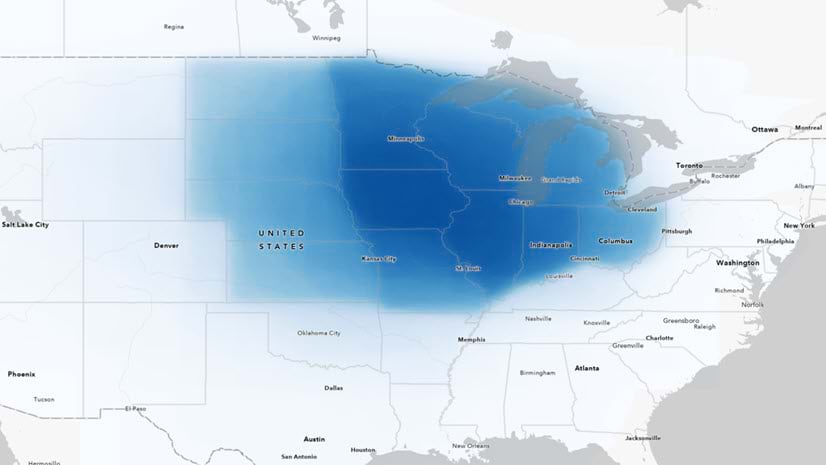
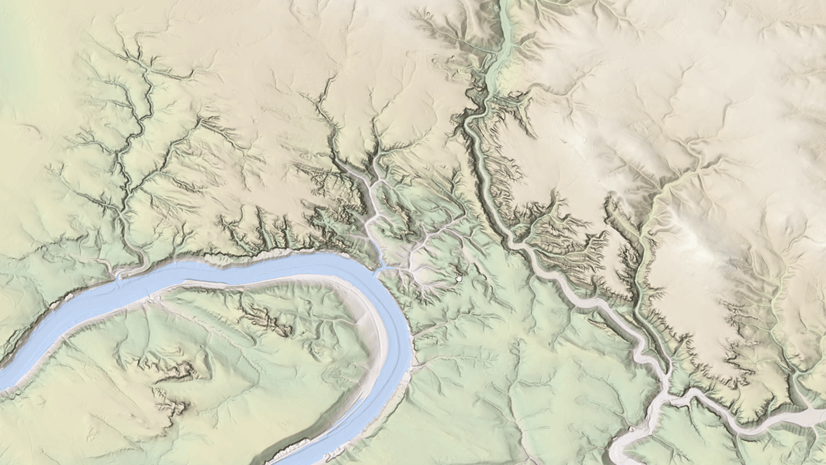
Soil HydrologyThe Soil Hydrology of the United States Web Map Application brings some of the most important hydrologic soil properties together in one map.  Find hydrologic group codes for hydrologic and hydraulic models.  Find hydric soil information to determine wetland land classification. Find depth to the water table for groundwater analysis and well drilling operations.

Continue reading

Posted in Hydro, Mapping | Tagged , , , , , , , , , , , , | 2 Comments

Applying the Watershed Approach to Flood Control Activities

by Laurie Williams, Senior Planner/Watershed GIS, County of Marin, CA

The Department of Public Works of Marin County, CA (just north of San Francisco, CA) launched a watershed program to integrate flood protection, stream and wetland habitat restoration activities, fish passage, and water quality improvements. Instead of looking at flooding issues on a site by site basis, we solve flooding problems at a watershed scale, and employ solutions such as habitat restoration to reduce flood risks.

From the outset, we decided to base our stakeholder outreach, collection of scientific studies and technical reports, and dissemination of information from the Marin County Watershed Program website (http://www.marinwatersheds.org) in order to save paper resources, be more user-friendly, support community outreach and more efficiently advertise our updates than is possible with more traditional printed reports and documents.

Our website is the major repository of meeting notices, posted reports, and maps. Our website designer, Athena Design, chose a color palette to enhance and reflect the colors of nature: the blues of water, the greens of plants, and browns for earth tones; orange splashes complement the dominant blue. We use the palette extensively in producing the watershed maps, as well as for printed materials and PowerPoint presentations for a unified design.

Continue reading

Posted in Hydro | Tagged , , , , , , , , , , , , , , | Leave a comment

Rapid Flood Inundation Mapping: Identifying Where Water Goes

by Paul Robinson, Water Resources Team Leader

Imagine being able to have an idea of where flooding issues are at the outset of a project. What if we could squeeze government dollars a bit harder and quickly map flood risk for a whole nation?

Making good use of available GIS data and new tools in the armory of our profession are rapid flood inundation models like Halcrow’s ISIS-FAST. The tool provides a quick assessment of flooding using simplified hydraulic principles to provide results up to 1000 times quicker when compared to other tools and methods available for flood inundation simulations – i.e. providing results in minutes as opposed to hours or days.

ISIS-FAST works by first identifying depressions on the floodplain before routing water through these depressions. Water depths in the depressions are determined by: volume of water flowing into that depression; level at which water can spill into neighboring depressions; and water level in neighboring depressions. ISIS FAST represents connectivity and volume filling effects on the floodplain, without having to represent detailed hydraulics.

Continue reading

Posted in Hydro | Tagged , , , , , , , , , , , , | Leave a comment

New Flood Planning Map will help river communities prepare for seasonal flooding

This month we released the Flood Planning Map, the first in a series of maps and apps to help emergency managers and community leaders prepare for flooding events.

The Flood Planning Map provides flood planners with a set of tools and workflows to prepare for seasonal river flooding. These tools and workflows are based on real-world examples that have been used during previous flood events in the upper Midwest. Seasonal river flood planning is typically conducted weeks or months in advance of predicted crest in each community.  This advance notice gives community leaders time to plan for securing assets, protecting infrastructure, or evacuating citizens within the impact area.

The first version of the Flood Planning Map provides the ability to do the following:

  • Determine the flood impact area based on predicted flood levels.
  • Identify critical infrastructure, facilities, and citizens that could be impacted.
  • Create budgetary cost estimates for temporary levees.
  • Share the results with others who will execute the flood plan.
Posted in Hydro, Local Government, Public Safety | Tagged , , , | 1 Comment

Heightening Situational Awareness During Floods Events

Prepared by: Fernando Salas, Graduate Research Assistant, University of Texas at Austin
Special thanks to Dr. David Maidment (CRWR), Dr. Stefan Fuest and Matt Ables (KISTERS), and Dan Siegel (Esri) for their individual contributions to the design and implementation of the Central Texas HUB.

The central Texas corridor, better known as “Flash Flood Alley,” is one of the most flood prone regions in the United States. In fact, Texas regularly leads the nation in flood fatalities and flood related property damage each year. During a flash flood, rapidly changing water levels can trap both emergency responders and citizens with little to no warning. In order to mitigate risk to residents and infrastructure, citizens and emergency responders need to exhibit “real-time” situational awareness to respond proactively instead of reactively. With the emergence of the internet, mobile communication networks and social media, it is now possible to quickly disseminate information to a vast audience in “real-time.” Furthermore, the emergence of GIS technology and web services has facilitated the creation of easily understandable map applications that readily convert data into actionable intelligence.

Flooding in Central Texas

Continue reading

Posted in Hydro | Tagged , , , , , , , , , , , , | 1 Comment

Empowering Action — New Tools for Crisis and Humanitarian Response

This week several members of our team attended the 3rd International Conference of
Crisis Mappers (ICCM)
that was held in Geneva, Switzerland and we were blown away by the turn out (Follow #ICCM on Twitter).  This community has grown substantially over the last 3 years – when we attended the first conference held in Cleveland, Ohio back in 2009 there were about 100 attendees.  Now there are more than 400 gathered here discussing crisis mapping and the challenges they face.  There are really 3 main things that we keep hearing as it relates to GIS and mapping: Continue reading

Posted in Public Safety | Tagged , , , , , , , | Leave a comment

Esri's Disaster Response Program

For many years Esri has provided assistance in the wake of disasters throughout the world.  The support comes in many forms including software, data, hardware and people.  Not only is it about Corporate Citizenship and helping our users but it gets to the very essence of Esri-making the world a better place through geography.  We know that maps and Geographic Information System (GIS) technology can make a difference in saving lives, reducing impact, and expediting restoration.  The mission of the Esri Disaster Response Program is to support our users, our partners, and Esri personnel who respond to disasters worldwide. 

How does Esri support these individuals? Well, there are many people involved behind the scenes when an incident happens all working to help the response effort.  Some of the different ways in which Esri personnel support the response includes:

  • Coordinate requests for assistance and make sure they are met
  • Contact our users and make sure they are okay and they have what they need
  • Process temporary licenses of software and ship media as needed
  • Collect and provide pointers to relevant data sources
  • Coordinate offers of assistance and support from our business partners
  • Travel to the incident in order to support the response effort
  • Stand-up and provide round the clock technical support as needed
  • Build and update web mapping applications that help provide situational awareness
  • Provide updates and information on our website about each incident

Recent software advances have resulted in ArcGIS becoming easier, faster, and more powerful-all of which are critical for support in any disaster.  We have increased the presence of live maps on Esri.com including more disaster specific applications such as the Latest News Map for example.  There are several different types of applications and we’ll put them up on our website for several different reasons. 

If the impact of a disaster is large enough on our planet and on our users, we will stand-up a website for the specific event.   One of the main purposes of this is to give GIS personal assigned to the incident more information about the geography and nature of the incident by bringing in relevant data sources that provide context.  We also include dynamic information from social media such as Twitter, Flickr, and YouTube.  Sometimes focused applications will be launched that include more detailed analytical tools and data that complement the available knowledge of an existing situation.

The main page for our disaster support is through this short URL-esri.com/disaster.  From this link you can access several permanent disaster sites that are specific to reoccurring disasters such as:

We mentioned that if the impact is large enough, we stand-up websites to support them and our users.  Here are a few examples of event specific sites that have been stood-up recently:

Some of the information from these applications and websites is of interest to the general public and news media.  We have created a short link that indexes the active disasters which can be quickly referenced for information esri.com/news/maps/.  Additionally you can see all of the maps we’ve produced over the last year-esri.com/news/maps/all.html.

How can you use Esri technology to support your own response efforts? Through our Public Safety Resource Center we provide a series of maps and applications for emergency management that may be used to stand-up a new capability quickly in response to an incident.  These templates not only include an application that can be used as a starting point but also include an information model delivered through a geodatabase, and standard symbology for disaster response.  All of these templates and resources are best practices that we have collected from our users who are subject matter experts in this area.  The templates for emergency management include:

We hope you find this information and resources helpful.  We hope you never have to use them for response but, when disaster strikes remember that the Esri Disaster Response Program is standing by to help!

Posted in Public Safety | Tagged , , , , , , , , , , , | Leave a comment

ArcGIS Online content provides information for Disaster Response

9/22/09–In disaster response work, a common challenge is to quickly gather data and accurately fuse it together to provide actionable information for those managing the emergency and related relief efforts. Properly trained emergency planners can use spatial information to implement measures, such as, establishing communications sites, restoring electrical power, and planning traffic routes to carry emergency supplies to critical facilities. Often, specific locally-stored datasets are not available to accommodate every possible contingency that may arise in disaster operations. In these cases, freely available content from ArcGIS Online can be used to help support these disaster response efforts. For example, demographic data from ArcGIS Online was recently used to create a map of the wildfires that affected southern California.

Below are a sample of the maps and data that are available through ArcGIS Online that can be used to support disaster response efforts:

Earthquake maps and data 

Flood maps and data

Hurricane and cyclone maps and data

Wildfire imagery maps and data

See esri.com for more information on disaster response and assistance.

See ArcGIS Online Help for information on the conditions for external use of ArcGIS Online content during a disaster.

Posted in Services | Tagged , , , , , , , | Leave a comment